There’s another ground turkey recall because of salmonella. Meat producer Cargill said last month that it was recalling some 36 million pounds of ground turkey that was produced in Arkansas and was distributed to about 30 states including Indiana. Now, Cargill is pulling an additional 185,000 pounds of turkey for the same reason. Cargill Value Added Meats Retail said the meat was sold under the name Honeysuckle White, HEB and Kroger. _______________________________________________________
A product subject to meat giant Cargill's recall of 36 million pounds of ground turkey linked to a nationwide salmonella outbreak is shown in Redwood City, Calif., Wednesday, Aug. 3, 2011. Cargill said Wednesday that it is recalling fresh and frozen ground turkey products produced at the company's Springdale, Ark., plant from Feb. 20 through Aug. 2 due to possible contamination from the strain of salmonella linked to the illnesses. The packages were labeled with many different brands, including Honeysuckle White and Kroger. (AP Photo/Paul Sakuma) _________________________________________________________________________
WASHINGTON (AP) -- Meat giant Cargill is recalling 36 million pounds of ground turkey linked to a nationwide salmonella outbreak that has killed one person in California and sickened at least 76 others.
Illnesses in the outbreak date back to March and have been reported in 26 states coast to coast.
Cargill said Wednesday that it is recalling fresh and frozen ground turkey products produced at the company's Springdale, Ark., plant from Feb. 20 through Aug. 2 due to possible contamination from the strain of salmonella linked to the illnesses.
Company officials said that all ground turkey production has been suspended at the plant until the company is able to determine the source of the outbreak.
"Given our concern for what has happened, and our desire to do what is right for our consumers and customers, we are voluntarily removing our ground turkey products from the marketplace," said Steve Willardsen, president of Cargill's turkey processing business.
The Minnesota-based company said it was initiating the recall after its own internal investigation, an Agriculture Department investigation and information about the illnesses released by the CDC this week.
All of the packages recalled include the code "Est. P-963" on the label, according to Cargill. The packages were labeled with many different brands, including Cargill's Honeysuckle White.
The CDC said this week that cultures of ground turkey from four retail locations between March 7 and June 27 showed contamination with the same strain of salmonella, though those samples had not been specifically linked to the illnesses. The CDC said preliminary information showed that three of those samples were linked to the same production establishment, but it did not name that plant.
A chart on the CDC's website shows cases have occurred every month since early March, with spikes in May and early June. The latest reported cases were in mid-July, although the CDC said some recent cases may not have been reported yet.
The CDC said the strain is resistant to many commonly prescribed antibiotics, which can make treatment more difficult. The agency said 38 percent of those sickened were hospitalized.
The states with the highest number sickened were Michigan and Ohio, 10 illnesses each, while nine illnesses were reported in Texas. Illinois had seven, California six and Pennsylvania five.
The remaining states have between one and three reported illnesses linked to the outbreak, according to the CDC: Alabama, Arizona, Georgia, Iowa, Indiana, Kentucky, Louisiana, Massachusetts, Minnesota, Missouri, Mississippi, North Carolina, Nebraska, Nevada, New York, Oklahoma, Oregon, South Dakota, Tennessee and Wisconsin.
The CDC estimates that 50 million Americans each year get sick from food poisoning, including about 3,000 who die. Salmonella causes most of these cases and federal health officials say they've made virtually no progress against it.
Government officials say that even contaminated ground turkey is safe to eat if it is cooked to 165 degrees. But it's also important that raw meat be handled properly before it is cooked and that people wash their hands with soap for at least 20 seconds before and after handling the meat. Turkey and other meats should also be properly refrigerated or frozen and leftovers heated.
The most common symptoms of salmonella are diarrhea, abdominal cramps and fever within eight hours to 72 hours of eating a contaminated product. It can be life-threatening to some with weakened immune systems.
Cargill executive Willardsen said, "Public health and the safety of consumers cannot be compromised."
"It is regrettable that people may have become ill from eating one of our ground turkey products," he said, "and, for anyone who did, we are truly sorry."
Donate To Keep This Site Alive ______________________________________________________ ___________________________ . .
VIDEO: MISSOURI THE BEAUTIFUL Take a patriotic tour of the Show Me State's natural wonders . . _____________________________________________________________________________
Jefferson, St. Louis counties report first cases of West Nile virus this year
September 8, 2011 www.stltoday.com __________________________________________________________________________
A 49-year-old Jefferson County man developed a severe case of West Nile virus, county health officials said Thursday. State health records show the man was hospitalized, but his current condition is unknown. Also Thursday, St. Louis County health officials said a Wellston boy was briefly hospitalized after being infected by the virus. The boy, 12, had a fever for three or four days with nausea and vomiting. His was the first case reported in St. Louis County this year. In 2010, the county reported one case of West Nile virus. A 48-year-old St. Louis city woman who became infected in August was the first case reported in the state this year. There have been five West Nile virus cases in Illinois this year. The virus, which is transmitted by mosquitoes, can cause flu-like symptoms. Most people who catch the virus do not develop any symptoms, although in very rare cases it can be fatal. The St. Louis County health department says the mosquito season won't be over for several weeks and reminds people to get rid of standing water outside and wear repellents.
___________________________________________ _____________________________________ . . Donate To Keep This Site Alive ______________________________________________________ ___________________________ . .
VIDEO: MISSOURI THE BEAUTIFUL Take a patriotic tour of the Show Me State's natural wonders . . ==========================================================
. NEWPORT BEACH (CBS) — Massive waves are expected to pummel Southern California’s coast through Sunday. At The Wedge in Newport Beach, waves averaged 10 to 12 feet Thursday, with some reaching higher than 20 feet. The Wedge has spectacularly high surf due to a jetty that causes waves to bounce off rocks and back into themselves, adding up to 25 percent more height. “It just gets real shallow here, it’s two waves coming together, the wave jumps up just twice its size,” said surfer Steve Morgan. “It’s like the whole washing machine effect. You’re getting upside down underwater and starting to lose your energy, but once you hit the beach it’s like, all right, whew, you’re still alive,” said surfer Spencer Pirdy. “It reverberates off the rocks and it has a lot of water moving around, a lot of rip currents that just suck you out and keep you in there forever,” Pirdy added. “Yeah, if you don’t know what you’re doing, you’re in a lot of trouble regardless of what luck is on your side.”A surfer died at the famous spot during a swell there in 2009. Pirdy said he loves the rush of energy that comes from surfing in waves like these. “It’s just a rush of adrenaline when you’re making that drop. It’s like nothing else matters, you just wanna make it,” he said. Those who enter the water – experienced surfers and swimmers – must receive permission from lifeguards. However, when a black flag goes up, surfers and body boarders are no longer allowed in the water. Thousands have lined the shores of area beaches to get a sight of some of the state’s biggest waves. “Yesterday we couldn’t believe how big it was, so we had to come back today and try to get here early enough to get a parking place,” said one spectator. Lifeguards said they did make two rescues on Thursday after two professional surfers needed assistance getting out of the water after they said they were pounded by the waves too hard. More than 3,000 spectators gathered at The Wedge Thursday, but more onlookers are expected Friday, when the surge returns.
VIDEO: MISSOURI THE BEAUTIFUL Take a patriotic tour of the Show Me State's natural wonders . . _____________________________________________________________________________
Map of Cesium-137 Deposition Across the Pacific by CEREA Shows the US More Contaminated Than Western Japan
September 1, 2011 ex-skf.blogspot.com __________________________________________________________________________
France's CEREA has the simulation map of ground deposition of cesium-137 from the Fukushima I Nuclear Power Plant accident on its "Fukushima" page. It not only shows Japan but also the entire northern Pacific Rim, from Russian Siberia to Alaska to the West Coast of the US to the entire US.
According to the map, the US, particularly the West Coast and particularly California, may be more contaminated with radioactive cesium than the western half of Japan or Hokkaido. It looks more contaminated than South Korea or China. Canada doesn't look too well either, particularly along the border with US on the western half.
The page also has the animated simulation of cesium-137 dispersion from March 11 to April 6, 2011. If the Japanese think they are the only ones who have the radiation and radioactive fallout from the accident, they are very much mistaken, if the simulation is accurate. (Meteorological institutes and bureaus in Austria, Germany, and Norway all had similar simulation maps.)
Radioactive materials spewed out of Fukushima I Nuke Plant went up and away on the jet stream, reaching the other side of the Pacific. When the fallout from explosions (March 14, 15) reached the US West Coast, it came with an unusually heavy rainfall in California. .
Donate To Keep This Site Alive ______________________________________________________ ___________________________ . .
VIDEO: MISSOURI THE BEAUTIFUL Take a patriotic tour of the Show Me State's natural wonders . . _____________________________________________________________________________
Australia 60 minutes episode about Fukushima. The Japanese people are human guinea pigs. Radiation is covering the Earth and an Unspeakable impact will be felt upon all humanity and the Earth.
How can anyone in this world say Nuclear energy is clean? One accident makes the whole world toxic and kills people and the Earth.
It is so hard to comprehend this is really happening. Australia's 60 minutes should be commended for discussing this, especially since it seems most media around the world has made Fukushima a forbidden subject and it is never spoken by name any more in Mainstream Media.
Donate To Keep This Site Alive ______________________________________________________ ___________________________ . .
VIDEO: MISSOURI THE BEAUTIFUL Take a patriotic tour of the Show Me State's natural wonders . . _____________________________________________________________________________
August 25, 2011 __________________________________________________________________________
WASHINGTON (AP) -- America is swiftly becoming a granny state. Less frail and more involved, today's grandparents are shunning retirement homes and stepping in more than ever to raise grandchildren while young adults struggle in the poor economy.
The newer grandparents are mainly baby boomers who are still working, with greater disposable income. Now making up 1 in 4 adults, grandparents are growing at twice the rate of the overall population and sticking close to family - if their grandkids aren't already living with them.
Grandparents in recent decades have often filled in for absent parents who were ill or battled addiction, or were sent to prison. The latest trend of grandparent involvement, reflected in census figures released Thursday, is now being driven also by the economy and the graying U.S. population, including the 78 million boomers born between 1946 and 1964 who began turning 65 this year.
"We help out in terms of running errands, babysitting, taking the grandkids to doctors' appointments, and for back-to-school shopping," said Doug Flockhart of Exeter, N.H., listing some of the activities that he and his wife, Eileen, do for their five kids and seven grandchildren. But that's just the start.
They also pitch in with health care payments for family members due to insurance gaps, and their pace of activity has picked up substantially since their daughter, who lives three blocks away, gave birth to her first child this month. Flockhart, a retired architect, likes the family time even if he and his wife worry about their grandkids' futures. Their oldest grandchild is 16.
"It's not so much the day in and day out, it's the big picture as to how these young kids will grow up and pay for a college education and buy a house," he said. "The middle class is so much less well-off than it used to be. We've put aside some savings for them, but with seven grandchildren it can only go so far."
Flockhart's situation is increasingly common, demographers say.
"Grandparents have become the family safety net, and I don't see that changing any time soon," said Amy Goyer, a family expert at AARP. "While they will continue to enjoy their traditional roles, including spending on gifts for grandchildren, I see them increasingly paying for the extras that parents are struggling to keep up with - sports, camps, tutoring or other educational needs, such as music lessons."
The latest numbers are based partly on separate analyses by Goyer and Peter Francese, founder of American Demographics magazine who is now a population analyst for the MetLife Mature Market Institute. Their data were supplemented with the latest 2010 census figures as well as interviews with Census Bureau and other experts.
Currently about 5.8 million children, or nearly 8 percent of all children, are living with grandparents identified as the head of household, according to 50-state census data released Thursday. That's up from 4.5 million, or 6.3 percent, who lived in such households in 2000.
Much of the increase in grandparent caregivers occurred later in the decade after the recession eliminated jobs for many younger people, surveys indicate. The 8 percent share of children now living with grandparents is the largest in at least 40 years - and it is believed to be the largest share ever, the population experts say.
In all, there are 62.8 million grandparents in the U.S., the most ever. They are projected to make up roughly 1 in 3 adults by 2020.
Nearly half the states had increases of 40 percent or more over the last decade in the number of grandchildren living with grandparents. They were led by states such as Nevada, Utah, Idaho, Wyoming, Arizona and Kentucky, which had influxes of young families or suffered higher rates of poverty.
On the other end of the scale, New Jersey, New York, Michigan and Louisiana saw the smallest increases, less than 10 percent. Each of those states saw slower population growth overall since 2000, particularly among young people.
The District of Columbia posted a decline of more than 20 percent in grandchildren living with grandparents, a sign of growing gentrification in the nation's capital in which smaller-sized white families are replacing black families with grandparent caregivers, who are moving to suburban areas.
Francese says the stereotype of grandparents who are frail, receding and dependent is changing. He noted that unemployment among workers ages 25 to 34 last year was double that of Americans aged 55 to 64. U.S. households headed by baby boomers also commanded almost half of the nation's total household income, and are more likely to be college graduates than grandparents in previous generations.
These grandparents reject living in senior communities in favor of "aging in place" in their own homes, near family. In 2009, households ages 55 or older spent billions of dollars on infant food, clothes, toys, games, tuition and supplies for grandchildren, according to the Bureau of Labor Statistics.
"Grandparents are supposed to be old, gray-haired people tottering around, but the vast majority are actually in the work force," said Francese, who released a paper on the topic last month. "There is not much doubt that the recent recession has brought grandparents and grandchildren together."
The government figures come as a congressional supercommittee considers possible reductions to Medicare and Social Security to achieve $1.5 trillion in federal spending cuts under the terms of the debt ceiling agreement. Up until now, lawmakers' proposals to cut the entitlement programs have met resistance from older Americans, including those 45 and older, who now make up a majority of the voting-age population.
The committee must issue its recommendations by late November, with action by Congress before year's end, or various parts of government will face automatic spending cuts.
Estella Hyde, 65, who lives near Erie, Pa., said additional government aid - not spending cuts - would go a long way for grandparents. She and her husband have raised their granddaughter, now 18, off and on since she was a year old, when Hyde's daughter-in-law at the time said she didn't want the burden.
Eventually the Hydes were able to adopt their granddaughter legally, which allowed her to have coverage under their health plan, but only after the couple fought through red tape and paid $10,000 in adoption fees. After a difficult childhood, her granddaughter will attend college this fall.
"It never happens in a happy situation where a son or daughter comes and says, `I need you to raise a child for me,'" said Hyde, a nursing professor who is now retired. "We were very lucky, we were able to financially take care of her and support her. But many grandparent caregivers need other sources of assistance."
In all, the states with the highest shares of children living in households headed by grandparents are in the South and West. They include Hawaii, Mississippi, Louisiana, New Mexico, South Carolina and Texas, each with at least 1 in 10 children living in grandparent households.
Among the states with high concentrations of grandparents overall - regardless of their living arrangement - are Maine, West Virginia, Florida, Pennsylvania, Iowa and New Hampshire, according to some estimates.
___________________________________________ _____________________________________ . . Donate To Keep This Site Alive ______________________________________________________ ___________________________ . .
VIDEO: MISSOURI THE BEAUTIFUL Take a patriotic tour of the Show Me State's natural wonders . . _____________________________________________________________________________
County Commission Says Pseudoephedrine Restriction Stands Up for Cops, Kids
August 18, 2011 By Evin Fritschle, Missourian Staff Writer www.emissourian.com ___________________________________________________________________________
A Villa Ridge man continued his open challenge of the county’s recently enacted ordinance restricting pseudoephedrine purchases without a prescription this week, and commissioners continued to defend their decision. Art LeBeau said commission Order 11-216, which went into effect Aug. 13, cited statutes that only empowered counties to make laws regarding possession and manufacture of pseudoephedrine, but not the sale of it.
“No where in the order is it stated where, how or what statute to promulgate said order is cited or any other statutory authority,” LeBeau said. “Thus the germane question is by what authority is Order 11-216 based upon. Obviously there is none.” He said the other portions of the order are superfluous because the order itself is not lawful. Presiding Commissioner John Griesheimer said the county was not doing anything new with its restrictions, citing Ripley County’s similar ordinance earlier this year and the numerous cities in the county that have similar provisions. “One man, even though he is the attorney general, made an opinion going beyond simply that the drugs have to be displayed behind the county. The thing is questionable, but no one has challenged it,” Griesheimer said of Missouri Attorney General Chris Koster’s opinion. Koster issued an opinion saying such ordinances are legal. “There is an ambiguity in the law,” Griesheimer said. “I understand where you’re coming from, and I would never go out on a limb and do something like this on an every day issue.” He and the other commissioners, Ann Schroeder and Terry Wilson, all vocally expressed their support for the ordinance, even if it does some day put the county in a legal bind. “There is a lot at stake in our communities,” Schroeder said. Wilson said the commission is aware of the risks of a legal challenge.
Detective Sgt. Jason Grellner, head of the county’s narcotics task force said, “What it all means is that under police powers, we can’t issue citations, but as a matter of public health risk and health concern, both for the victims in the labs as well as those who may live nearby, move into a home which previously had a lab not properly mitigated and even the motoring public, we can restrict it,” he said.
___________________________________________ _____________________________________ . . Donate To Keep This Site Alive ______________________________________________________ ___________________________ . .
VIDEO: MISSOURI THE BEAUTIFUL Take a patriotic tour of the Show Me State's natural wonders . . _____________________________________________________________________________
Mercy Invites All Area Physicians to Work Together for the "Good of the Community"
by dfox www.klpw.com August 17, 2011 ___________________________________________________________________________
A letter was sent from Mercy officials to all Patients First physicians inviting them to contact Mercy in hopes of creating a new beginning around a common goal of good health care for Washington and surrounding communities. It’s no secret that the two are each other’s main competition; however, in a letter released from the Mercy organization August 10th, this latest invitation seems to be a more of a peace offering. Patients First Physicians were invited to contact St. John’s Mercy President Terri McLain, Mercy CEO Lynn Britton, Chief Operating Officer Mike McCurry or Mercy Chief of Staff Tom Riechers to see how they fit in the dialogue. Mercy recently announced its plans for growth in Franklin County, including 236 million dollars in new facilities and services over the next 10 years. Mercy officials will be on KLPW “The Morning Show” with Diane Jones tomorrow morning at nine-twenty to discuss this in further detail. A copy of the letter sent to all Patients First Health Care physicians is posted under this story.
LETTER:
August 10, 2011 Dear Dr. On the night of June 28, Mercy held our second annual community roundtable. Our first roundtable event was in the spring of 2010 and began a yearlong master planning process for the ministry in the Franklin County region. This year, almost 200 community members met in Union to review the resulting plan and to give further input to how we can set the future of health for the people of the Washington area. At this meeting, each of the five of us stood before leaders of our community and committed to invest in a system of care that will be a model for good health – the personal health of friends and families, and the economic health of the community we share. Since that meeting, we have processed the notes and comments of the participating community members, and once again we see a common theme surface. There is a strong, prevailing desire that Mercy and the physicians of Patients First work together for the common good of the community. That is why we are writing to you today. We are very interested in talking with you about a future together. We have reached out to your board; now we are reaching out directly to you with the intention of creating a new beginning, and discussing what it could mean to you personally and professionally to align around a common goal of good health for the Franklin County area. We have also committed to keep community leaders involved and informed as we execute our master plan. Their ongoing feedback is essential and we will be faithful to their active partnership as we move forward. For that reason, we will also be sharing with them that we have reached out to you and invited you to the table. We firmly believe that ‘community’ is a precious resource, and by working together, we can preserve it for the future. On the following page, you will find a number of ways to contact us, including our personal phone numbers. Please give us a call if you would like to discuss any aspect of our community’s health and how we might work together for the good of the community. We look forward to moving ahead. Sincerely, Mike McCurry Mercy Chief Operating Officer (314) 628-3423 mike.mccurry@mercy.net Lynn Britton Mercy President and Chief Executive Officer (314) 628-3653 lynn.britton@mercy.net Terri McLain President St. John’s Mercy Hospital (636) 221-2135 terri.mclain@mercy.net Tom Riechers, MD Vice President Medical Affairs St. John’s Mercy Hospital (314) 795-6478 tom.riechersm.d@mercy.net Jennifer Scheer, MD Medical Director Mercy Clinic Franklin County (314) 578-7572 jennifer.scheer@mercy.net
___________________________________________ _____________________________________ . . Donate To Keep This Site Alive ______________________________________________________ ___________________________ . .
VIDEO: MISSOURI THE BEAUTIFUL Take a patriotic tour of the Show Me State's natural wonders . . _____________________________________________________________________________
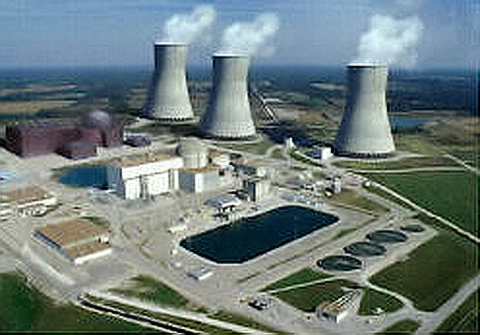
Callaway Nuclear Power Plant #2 (proposed) - Near Fulton, MO ________________________________________________________________________
Sponsor says Ameren bill’s backers ready if bill brought up in special session by Mike Lear July 27, 2011 www.missourinet.com ___________________________________________________________________________
The Senate sponsor of the Ameren site permit bill thinks the alliance that backed it is ready to support it in the special session in September. Senator Mike Kehoe’s legislation would allow electric companies to pass along to customers the cost of getting a new site permit.
In addition to Ameren, it was supported by Empire District Electric, Kansas City Power and Light, the Association of Missouri Electric Cooperatives, Associated Electric Cooperative and the Missouri Public Utility Alliance. Kehoe says those entities are still talking daily and are in agreement on a balanced approach.
Kehoe thinks the bill fits in with the economic development package already being discussed because the project to build a new nuclear power plant at the Callaway County site would create jobs.
The Senator believes passing the site permit bill in special session could also make the project eligible for grants being considered now in Washington D.C. He says the grants would further reduce the amount ratepayers incur.
So far the special session will deal with the economic development bill and a change in the date of Missouri’s presidential primary.
Donate To Keep This Site Alive ______________________________________________________ ___________________________ . .
VIDEO: MISSOURI THE BEAUTIFUL Take a patriotic tour of the Show Me State's natural wonders . . _____________________________________________________________________________
In this Wednesday, Dec. 16, 2009 picture, reactor containment domes of the Indian Point nuclear power plant in Buchanan, N.Y. rise above the homes just north of the town of Verplanck, N.Y. as seen from the Stony Point Historic Site. Populations around nuclear plants have swelled since 1980, making effective evacuations unlikely in many once-rural emergency planning zones, according to an Associated Press investigation. (AP Photo/Julie Jacobson) _________________________________________________________________________
BUCHANAN, N.Y. (AP) -- As America's nuclear power plants have aged, the once-rural areas around them have become far more crowded and much more difficult to evacuate. Yet government and industry have paid little heed, even as plants are running at higher power and posing more danger in the event of an accident, an Associated Press investigation has found.
Populations around the facilities have swelled as much as 4 1/2 times since 1980, a computer-assisted population analysis shows.
But some estimates of evacuation times have not been updated in decades, even as the population has increased more than ever imagined. Emergency plans would direct residents to flee on antiquated, two-lane roads that clog hopelessly at rush hour.
And evacuation zones have remained frozen at a 10-mile radius from each plant since they were set in 1978 - despite all that has happened since, including the accidents at Three Mile Island, Chernobyl and Fukushima Dai-ichi in Japan.
Meanwhile, the dangers have increased.
More than 90 of the nation's 104 operating reactors have been allowed to run at higher power levels for many years, raising the radiation risk in a major accident. In an ongoing investigative series, the AP has reported that aging plants, their lives extended by industry and regulators, are prone to breakdowns that could lead to accidents.
And because the federal government has failed to find a location for permanent storage of spent fuel, thousands of tons of highly radioactive used reactor rods are kept in pools onsite - and more is stored there all the time.
These mounting risks, though, have not resulted in more vigilant preparations for possible accidents.
The AP found serious weaknesses in plans for evacuations around the plants, including emergency drills that do not move people and fail to test different scenarios involving the weather or the time of day.
Some plans are merely on checklists, and never have been tested. In drills, responders typically go to command centers and not to their emergency posts. There is no federal requirement for how fast an evacuation must be carried out.
And disaster planners from the U.S. Nuclear Regulatory Commission and the Federal Emergency Management Agency have made dubious assumptions about the public response to a major accident. They insist, for example, that people who are not called upon to evacuate will stay put; they're now saying that they might under some circumstances tell people to hunker down at home even in the 10-mile evacuation zone, and they believe people will do it.
That advice flies in the face of decades of science and policy, millions of dollars in planning and preparations - and common sense.
The advice also conflicts with what U.S. officials told Americans in Japan in March, when an earthquake and tsunami knocked out power to Fukushima and melted fuel in three of its six nuclear reactors.
Japanese officials ordered those living within 12 miles of the site to leave. The U.S. government's advice to its citizens? If you're within 50 miles, you should evacuate. And NRC Chairman Gregory Jaczko insisted that this was nothing more than what would be recommended in a similar situation at home.
In fact, under rules in force for more than 30 years, U.S. communities must by law prepare federally reviewed evacuation plans only for those living within 10 miles of a plant. In a severe accident, most of the early deaths - those from radiation sickness, not cancer - are predicted to occur within a 10-mile radius.
Those living within 50 miles, meanwhile, are covered only by an "emergency ingestion zone," where states are required to make plans to ban contaminated food and water - but not evacuate.
After a May 10 tour at the Indian Point nuclear complex, where two reactors operate just 25 miles from New York City's northern border, Jaczko said the 10-mile rule was merely a "planning standard." He said decisions on what to do in the "unlikely event" of an accident would be based on circumstances. "So if we needed to take action beyond 10 miles, that's certainly what would be recommended."
If a 50-mile order were ever issued for Indian Point, it would take in about 17.3 million people - 6 percent of all Americans, according to an AP population analysis. That would include parts of New Jersey and Connecticut and all of New York City, except for a chunk of Staten Island.
Such a mass exodus would be an "enormous challenge" - and a historic feat, said Kelly McKinney, New York City's deputy commissioner of preparedness.
"At no time in the history of man," he said, "has anyone tried to move 17 million people in 48 hours."
---
ANALYSIS PINPOINTS GROWTH
When reactors were being built, starting in the 1960s, they were generally kept away from population centers. Their remote locations were viewed as a fundamental safety feature - protection aimed at "reducing potential doses and property damage in the event of a severe accident," according to federal guidelines.
However, over the decades, millions of newcomers have transformed tranquil woodland or shoreline into buzzing suburbs and bedroom communities.
The AP gathered four sets of population data starting in 1980 through 2010 and used mapping software to calculate growth as part of a yearlong investigation of aging issues at nuclear power plants.
Last week, the AP reported that federal regulators, working in concert with industry, have repeatedly weakened or failed to enforce safety standards so old reactors can keep operating. The records review included tens of thousands of pages of government and industry studies, test results, inspection reports and regulatory policy statements.
The AP found in its population analysis that over the decades, plant operators and federal regulators have given surprisingly little thought to nearby population growth.
Officials calculate plant safety margins without considering whether an accident would expose 10,000 or 100,000 people to radiation sickness and cancer. And federal regulators have set no limit for how long evacuations may take for given conditions and locations.
The NRC and FEMA acknowledge that radiation releases can happen within a half hour of an accident. Yet a 2004 study for Indian Point estimated total evacuation time from the 10-mile zone, in the snow that is common during local winters, would take 12 hours.
The federal government has not even required population updates for the evacuation zones, though that would change under a proposal expected to be adopted later this year.
The AP analysis also shows that:
-Four million people now live within 10 miles of the 65 operating sites. (Population in overlapping zones was counted only once for this part of the analysis.) Back in 1980, with 38 nuclear sites, only 1.5 million people lived that close.
-Overall, from 1980 to 2010, the average population in the 10-mile evacuation zones ballooned by 62 percent, from 39,762 to 64,363.
-Populations within the 10-mile radius have more than doubled at 12 of the 65 sites during the same 30-year period.
-The most explosive growth occurred around the two-reactor Saint Lucie complex near Fort Pierce, Fla., where the 10-mile population of 43,332 in 1980 grew 366 percent to 202,010 in 2010. Others in the top five: the two-unit Brunswick complex near the North Carolina coast, which increased 326 percent from 8,164 to 34,782; Monticello, 35 miles from Minneapolis, where population rose 314 percent from 14,130 to 58,538; the two-unit Turkey Point site, 20 miles south of Miami, up 302 percent; and the two-unit San Onofre facility in San Clemente, Calif., up 283 percent.
-Among newer reactors, the biggest jump occurred around Shearon Harris, 20 miles southwest of Raleigh, N.C., where population nearly quadrupled from 24,700 in 1990 to 94,465 in 2010. Three other facilities where populations more than doubled during the same 20-year period are the three-unit Palo Verde site, 50 miles west of Phoenix; two-unit McGuire site, 17 miles north of Charlotte, N.C., and the two-unit Catawba complex in South Carolina, 18 miles south of Charlotte.
-About 120 million people, almost 40 percent of all Americans, live within 50 miles of a nuclear plant, according to the AP's analysis of 2010 Census data.
---
TRAFFIC JAMS ON A GOOD DAY
The geography and population around Indian Point have always been a challenge for emergency planners.
Homes and businesses dot hillsides sloping to the eastern shore of the Hudson River. Along its bank, a curvy, two-lane main artery meanders past traffic lights through quaint town centers suffused with Dutch history and the lore of writer Washington Irving. At rush hour, the roadway crawls with idling cars.
Choke points are everywhere: the narrow Bear Mountain Bridge just north of the plant; the Route 202 slog through old Peekskill; and the Tappan Zee Bridge, which acts as the major river crossing to the south, beyond the 10-mile evacuation zone.
A potential destination for many evacuees, the bridge often backs up with traffic for miles during the morning and evening commutes.
Just a mile to the west across the Hudson, two-lane Route 9W snakes beneath the base of Bear Mountain State Park, offering few escape routes.
Though modest population growth of 32 percent within 10 miles of Indian Point has mirrored the nation's increase as a whole between 1980 and 2010, more people live within this evacuation zone than any other in the country: 268,906, according to the AP analysis.
Population density isn't the only concern. A 2008 Columbia University study discovered a seismic fault line near Indian Point, where another earthquake-prone zone was already known to exist. Yet a steel liner designed to be earthquake-proof has been leaking at the site since 1973.
New York state has fought relicensing. Gov. Andrew Cuomo says the area can't be evacuated in a severe nuclear accident.
Given the local topography - natural and man-made - a quick evacuation would be a challenge.
But when Jaczko's talk of a possible 50-mile evacuation in the United States is brought into the equation, the prospect is truly daunting.
In some accidents, New Yorkers would presumably head west to New Jersey using the George Washington Bridge, the Lincoln Tunnel and the Holland Tunnel - passageways that are rarely light on traffic. Any evacuation from the 10-mile zone along those routes could be complicated by a so-called shadow evacuation by those living within 50 miles who defy official instructions to stay put.
There are other fears - that some police and bus drivers would leave instead of stay to help and that parents would rush to schools instead of meeting their children at designated centers outside the evacuation zone.
As with other nuclear sites, the Indian Point emergency plan puts school reception centers outside the 10-mile zone - but not far outside.
Indian Point's lead community evacuation planner, Anthony Sutton, at the Westchester County Department of Emergency Services, acknowledged that area roads couldn't handle the traffic surge from a full-scale nuclear emergency. "I think in a perfect world, we'd all like to see the place in a different location, with all the challenges of evacuating the public around it," he said.
Paul Blanch, a nuclear safety expert who used to consult at Indian Point but now opposes its effort for a 20-year license extension, was more blunt: "No matter what they say, they're not going to be able to evacuate these areas."
John Curry, Indian Point's emergency director, said he believes people can evacuate from the 10-mile zone. But he acknowledges the depth of public skepticism: "It's very difficult, and I don't know how to make them feel any better."
---
SAFETY IN `LOW' NUMBERS
Two dozen of the nuclear sites along the East Coast are within 50 miles of New York, Boston, Washington, Baltimore or Richmond, Va.
"Anyone who lives on the East Coast knows population has grown up around these reactors, and there are certain places where they should never have been built in the first place," said Jim Riccio, nuclear policy analyst for environmental group Greenpeace.
For the most part, though, the early sites were favored if they satisfied the criterion of "remoteness from heavily populated areas," according to the NRC's predecessor, the Atomic Energy Commission.
In 1998, federal guidelines said low-population areas were "generally preferred" because they limit exposure to radiation accidents. This was viewed as part of the NRC's philosophy of multiple layers of accident safeguards. NRC regulations continue to require "low population zones" around prospective nuclear sites.
But from the beginning, it was hard to use very remote sites. Sites were desirable when they were still close enough to transportation networks to haul in massive equipment and supplies and near enough to amenities to lure engineers and corporate managers.
The contradiction meant choosing places like the piney hills of Wake County, N.C., where federal regulators gave permission to build Shearon Harris in 1978.
They described the region as a "sparely populated rural area." But it was just 20 miles from Raleigh - and future commuter sprawl - which accounted for the population nearly quadrupling within the 10-mile zone from 1990 (three years after it went online) to 2010.
Complicating things nationwide, government and industry officials also tended to underestimate projected growth - picking numbers that helped win approval for favored sites.
For example, federal regulators predicted in 1973 that the 50-mile population around the Crystal River nuclear plant in Florida would expand from 155,900 to only 381,000 by 2020. "The basic rural character of the area is not expected to change in the coming 40 years," the government predicted.
Yet the plant was built in Citrus County on the state's picture-postcard west coast, 70 miles north of Tampa. And by 2010 - 10 years ahead of the predicted timetable - the population had already multiplied by six, to over 1 million, the AP analysis shows.
"These population explosions are very likely to make the evacuation plan unworkable," said anti-nuclear activist Paul Gunter at Beyond Nuclear in Takoma Park, Md., who has pressed for reviews of emergency community planning before relicensing.
Even Dana Powers, a member of the NRC's independent Advisory Committee on Reactor Safeguards, says his group "has had troubles with evacuation strategy assumptions."
U.S. Energy Secretary Stephen Chu recently suggested that the Japanese accident will indeed drive U.S. regulators to pick less populated areas for future nuclear plants.
Emergency readiness was supposed to account for growth and stay up to date. The joint guidance of the NRC and FEMA in 1980 stated that "evacuation time estimates should be updated as local conditions change." In fact, according to AP's review of government records, once plant turbines started humming, little was done to keep planning in step with population increases.
In 2007, then-Commissioner Jaczko acknowledged that some evacuation time estimates had not been updated "in decades."
A proposed rule would require fresh estimated evacuation times with new Census data every 10 years - and after that, with any jumps in population that would increase the time estimate by either 25 percent or 30 minutes.
The proposal also would require an annual update of the population estimate. If adopted as expected, it would be the first overhaul of emergency preparedness rules since 1980.
Given the lack of a required evacuation time, though, any updates might make little difference.
Even with increased concern among federal regulators, challenges remain in the mission to inform the public quickly and accurately.
A FEMA web page entitled "Nuclear Power Plant Emergency," last modified on April 8, states: "Nearly 3 million Americans live within 10 miles of an operating nuclear power plant." That's off by one million people.
Then there is the relatively new and sparsely publicized concession to escalating populations and roads that haven't been upgraded or widened in decades. It's called "sheltering" - if people stay put, maybe they can evacuate later, after the first wave of people has left.
A 2007 Sandia National Laboratories report said excess radiation doses could be reduced if residents simply hunkered down in their homes. However, the report acknowledged that "some contamination and radiation will enter most shelters."
Then, sending another mixed message that could prompt unofficial evacuations, the report continued: If quick evacuation is possible, leaving is "always the most appropriate recommendation."
---
PLAYING WITH NUMBERS
As part of its investigation, the AP has reported that researchers' numbers and assumptions - along with NRC regulations - have been periodically adjusted to keep the reactors within stated limits for operating safety. Similarly, confronted with evacuation troubles, the NRC has minimized the presumed impact of accidents, allowing plants to stay on the power grid.
The studies date back to the early 1980s, when the NRC wanted more guidance about where to locate nuclear reactors. So the agency decided to assess the potential effects of serious accidents on surrounding communities.
Its 1982 report alarmed Congress. At Indian Point Unit 3, the study predicted 64,000 deaths and $314 billion in damages from a bad accident ($700 billion today, adjusted for inflation).
The public was so shaken that the NRC and industry avoided similar analyses for decades.
However, in its Indian Point relicensing proposal, owner Entergy Corp. finally reevaluates some of the numbers. The effects of a bad accident are minimized, according to an AP analysis of those numbers: no more than 2,130 cancer deaths and only $117 billion in economic damages.
Plant spokesman Jerry Nappi went even further when pressed. Contrary to the calculations of planners, he said he didn't "believe a scenario like this is credible or perhaps even possible" with all the protections built into the plant. As for a 50-mile evacuation encompassing New York, he said a 10-mile radius "is already a very conservative planning zone."
Nuclear planners gave similar confident reassurances about their tsunami planning in Japan. And the BP emergency plans left out Gulf of Mexico oil spill scenarios that occurred, even though they supposedly couldn't happen.
Meanwhile, the NRC's partner, Sandia National Laboratories, has again been studying the impact of accidents. The work is still under way, but researchers have tentatively concluded that reactor defenses will work way better than believed in the 1980s.
NRC officials say the conclusion stems from decades of additional research and sophisticated computer modeling. But they also wrap their equations in a ribbon of rosy assumptions:
-Accidents will develop more slowly than thought.
-Buildings designed to contain radiation leaks will hold.
-Emergency plans will work.
-Responders will do their jobs.
-Ninety percent of those told to stay put will obey.
"The magnitude of possible releases from these accidents is much smaller than originally thought," said NRC spokesman Scott Burnell in a preview of the conclusions expected to take final form by 2012.
---
PLANS LACK TEETH
The population boom near nuclear sites cries out for stronger evacuation standards, according to safety watchdogs. But little has been done, thus helping ensure the continued operation of the aging reactors.
While keeping evacuation zones the same size at aging plants, regulators often have allowed the units to run at higher power levels. More power means more radioactivity that could be released in an accident.
Since 1977, all the reactors collectively have upgraded their maximum power output 139 times.
In May, the two Point Beach reactors, on the Wisconsin shore of Lake Michigan, were each given permission to increase power levels by 17 percent. Meanwhile, population within 50 miles has grown by 36 percent from 573,050 to 779,140 over the past three decades.
In 2008, the NRC's policymaking commissioners even voted to give lower-level staff the authority to approve sensitive changes that would weaken emergency plans. It had been in the purview of the commission itself.
Today, government regulators verify emergency preparedness of communities essentially by checklists, not by standards for what plans must accomplish. They require that communities show the elements of a good plan, but not that the plan is effective.
For example, evacuation time estimates are required, but there is no standard for how quickly people must be able to leave. Regulators say the estimates will help planners make decisions in a real accident, even in the absence of a standard.
Jim Kish, a FEMA administrator who focuses on emergency preparedness, said in an interview that a standard would put communities in an undesirable "planning box."
"They need the flexibility to make decisions on what to evacuate, and when to evacuate, and how to evacuate," he said.
"I think the NRC wants to make sure that the evacuation side of things doesn't make plants have to close, even if the population grows quickly," said Richard Webster, an environmental lawyer who unsuccessfully fought the relicensing petition at the Oyster Creek reactor in Lacey Township, N.J.
More broadly, the government seems careful to avoid anything fully binding in its planning requirements. It sets a supposed standard that people within 10 miles must be notified of an accident within 45 minutes. But NRC rules also say that's not a guarantee early notification can be provided for everyone.
And notification of an accident within 45 minutes says nothing about how long it will take to flee.
NRC rules also concede there's no guarantee that emergency sirens, "when tested under actual field conditions, will meet the design objective in all cases."
This movable standard makes things easier for plant owners who often struggle to keep warning sirens working from their perches within the 10-mile zones.
FEMA encourages drills for rush-hour traffic, night conditions, or bad weather. But it does not require them, the agency acknowledged.
Heather Heigl, the lead community emergency planner for the area around the Brunswick site in North Carolina, said daylong drills every two years verify that the right people and resources are available, and that communications systems are working.
However, she acknowledged, the exercises don't actually send rescue workers to shelters or police officers to traffic control points. Asked for the estimated evacuation times for her site, she wasn't sure.
"The NRC rubber-stamps these evacuation plans, but they're not based on discernible performance standards," said Alex Matthiessen, president of the Riverkeeper environmental group fighting Indian Point relicensing. "If they applied any kind of meaningful standard in evaluating the emergency plans of the nation's nuclear power plants, there would be no nuclear power plants in this country, at least not in populated areas."
Attorney Webster argued that safety standards should become harder to meet as populations grow around plants like Oyster Creek. (In AP's analysis, population between 1980 and last year increased 269 percent within 10 miles of Oyster Creek, from 36,738 to 135,378.)
During an emergency there, many would be forced to leave in the same direction, away from the Atlantic Ocean, along a highway that a pro-nuclear state senator has called "a two-lane cow path."
Janet Tauro, a nuclear safety activist who lives 18 miles from the plant, wonders: "Picture me with my son on his BMX bike and my daughter at dance class, multiply me by 100,000 - and you have pandemonium."
Helen Henderson, who lives three miles from the reactor, is among the doubters. She said she repeatedly ignored the forms sent home by her children's school certifying that she has read and agrees with the Oyster Creek emergency plan.
Tired of the stream of reminders sent her way, Henderson said she finally wrote back: "Refuse to sign. Evacuation plan will not work."
___________________________________________ _____________________________________ . . Donate To Keep This Site Alive ______________________________________________________ ___________________________ . .
VIDEO: MISSOURI THE BEAUTIFUL Take a patriotic tour of the Show Me State's natural wonders . . _____________________________________________________________________________
New Study: Fluoride Can Damage the Brain - Avoid Use in Children
www.prnewswire.com JUNE 23, 2011 ___________________________________________________________________________
NEW YORK, June 21, 2011 /PRNewswire-USNewswire/ -- "The prolonged ingestion of fluoride may cause significant damage to health and particularly to the nervous system," concludes a review of studies by researchers Valdez-Jimenez, et al. published in Neurologia (June 2011), reports New York State Coalition Opposed to Fluoridation, Inc. (NYSCOF). The research team reports, "It is important to be aware of this serious problem and avoid the use of toothpaste and items that contain fluoride, particularly in children as they are more susceptible to the toxic effects of fluoride." (1) "Fluoride can be toxic by ingesting one part per million (ppm), and the effects are not immediate, as they can take 20 years or more to become evident," they write. Most fluoridating U.S. public drinking water suppliers add fluoride chemicals to deliver 1 ppm fluoride (equal to about 1 milligram per quart) intending to benefit teeth and not to purify the water. "Fluoridation clearly jeopardizes our children and must be stopped," says attorney Paul Beeber, President, NYSCOF. "We can actually see how fluoride has damaged children's teeth with dental fluorosis; but we can't see the harm it's doing to their brains and other organs. No U.S. researcher is even looking," says Beeber. Valdez-Jimenez, et al. describe studies that show fluoride induces changes in the brain's physical structure and biochemistry which affects the neurological and mental development of individuals including cognitive processes, such as learning and memory. "Fluoride is capable of crossing the blood-brain barrier, which may cause biochemical and functional changes in the nervous system during pregnancy, since the fluoride accumulates in brain tissue before birth," they write.* Animal studies show fluoride's toxic brain effects include classic brain abnormalities found in patients with Alzheimer's disease, Valdez-Jimenez's team reports. A different research team (Tang et al.) reported in 2008 that "A qualitative review of the studies found a consistent and strong association between the exposure to fluoride and low IQ." (Biological Trace Element Research) (2) In 2006, the U.S. National Research Council's (NRC) expert fluoride panel reviewed fluoride toxicology and concluded, "It's apparent that fluorides have the ability to interfere with the functions of the brain." And, "Fluorides also increase the production of free radicals in the brain through several different biological pathways. These changes have a bearing on the possibility that fluorides act to increase the risk of developing Alzheimer's disease." (3) On April 12, 2010, Time magazine listed fluoride as one of the "Top Ten Common Household Toxins" and described fluoride as both "neurotoxic and potentially tumorigenic if swallowed." (4) Phyllis Mullenix, Ph.D., was the first U.S. scientist to find evidence that fluoride damages the brain. She published her animal study in a respected peer-reviewed scientific journal in 1995 (5) and then was fired for doing so.(6) Vyvyan Howard, M.D., Ph.D., a prominent fetal toxicologist and past-President of the International Society of Doctors for the Environment, said that current brain/fluoride research convinces him that we should stop water fluoridation. Many communities have stopped or rejected fluoridation in the past several years – the most recent is Fairbanks, Alaska. This year, seven New York City Council Members co-sponsored legislation to stop fluoridation in NYC. *Translated from Spanish using Google Translation References: groups.google.com/d/topic/fluoridation-news-releases/rD7pCONMcLw/discussion Contact: Paul Beeber, JD, 516-433-8882 nyscof@aol.com http://www.FluorideAction.Net http://www.fluoridation.webs.com VIDEO: Chemical Dumbing Down of America .
. Why is America so brainwashed by the corporate media? Why do we care more about American Idol and Dancing with the Stars than being harmed with thimerosal in our vaccinations and sodium fluoride in our water supply? Most Americans know nothing about these topics, but hopefully this video will shed some light on the issue.
___________________________________________ _____________________________________ . . Donate To Keep This Site Alive ______________________________________________________ ___________________________ . .
VIDEO: MISSOURI THE BEAUTIFUL Take a patriotic tour of the Show Me State's natural wonders . . _____________________________________________________________________________